

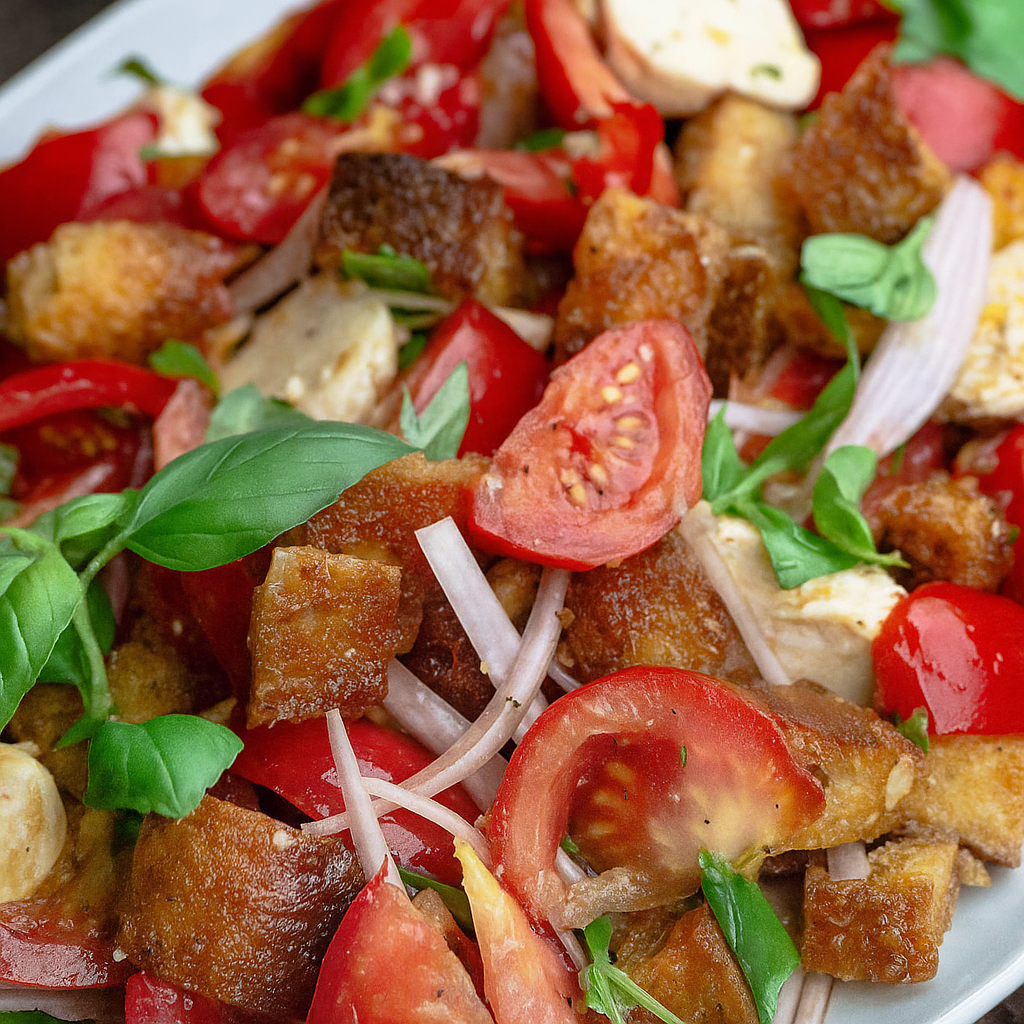
Salad panzanella is the ultimate no-cook summer dish that turns day-old bread into gold. I still remember the first time I tossed hunks of stale ciabatta with juicy tomatoes, onions, and basil—what started as a kitchen cleanup became a crowd favorite. This article dives into the essentials of Salad panzanella: what’s in it, how to perfect it, its origins, and whether it’s a healthy pick. Let’s turn simplicity into something special.
What’s in a Salad Panzanella?
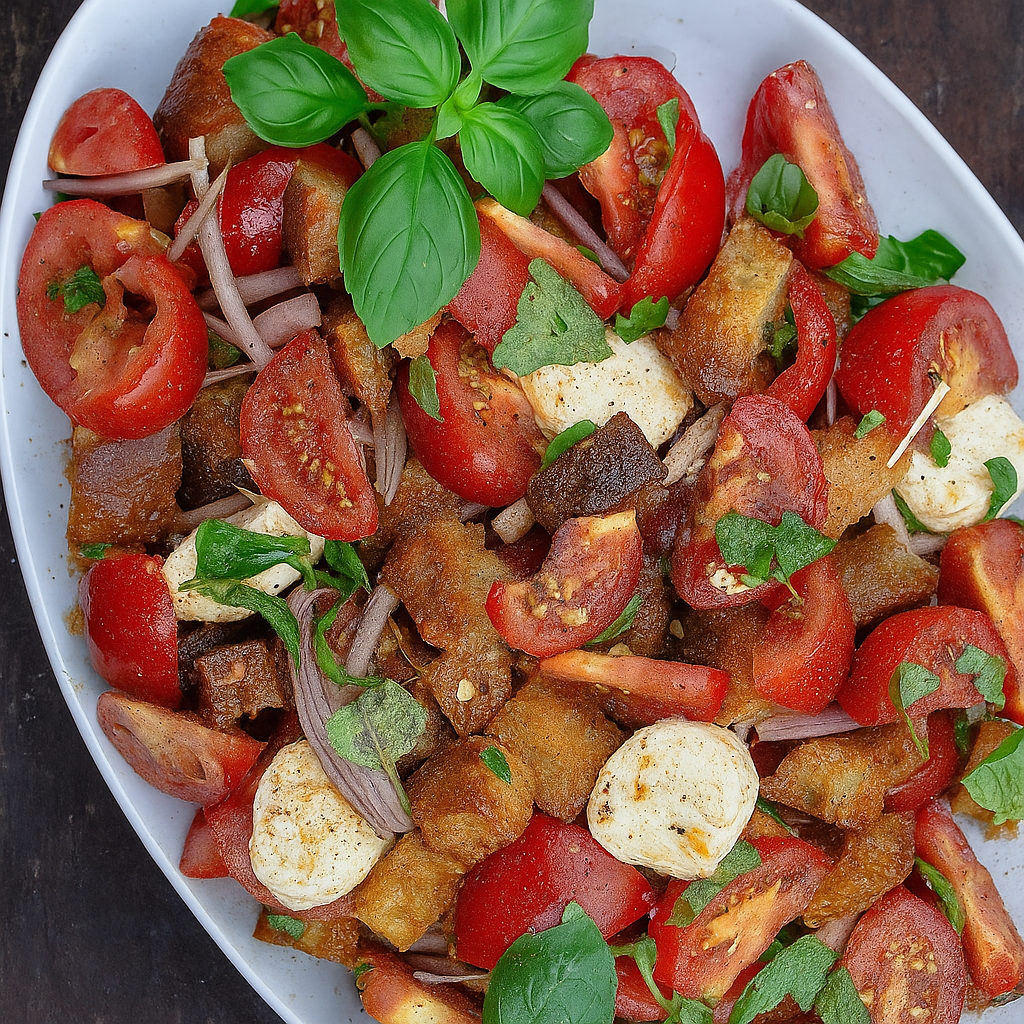
Core Ingredients You’ll Need
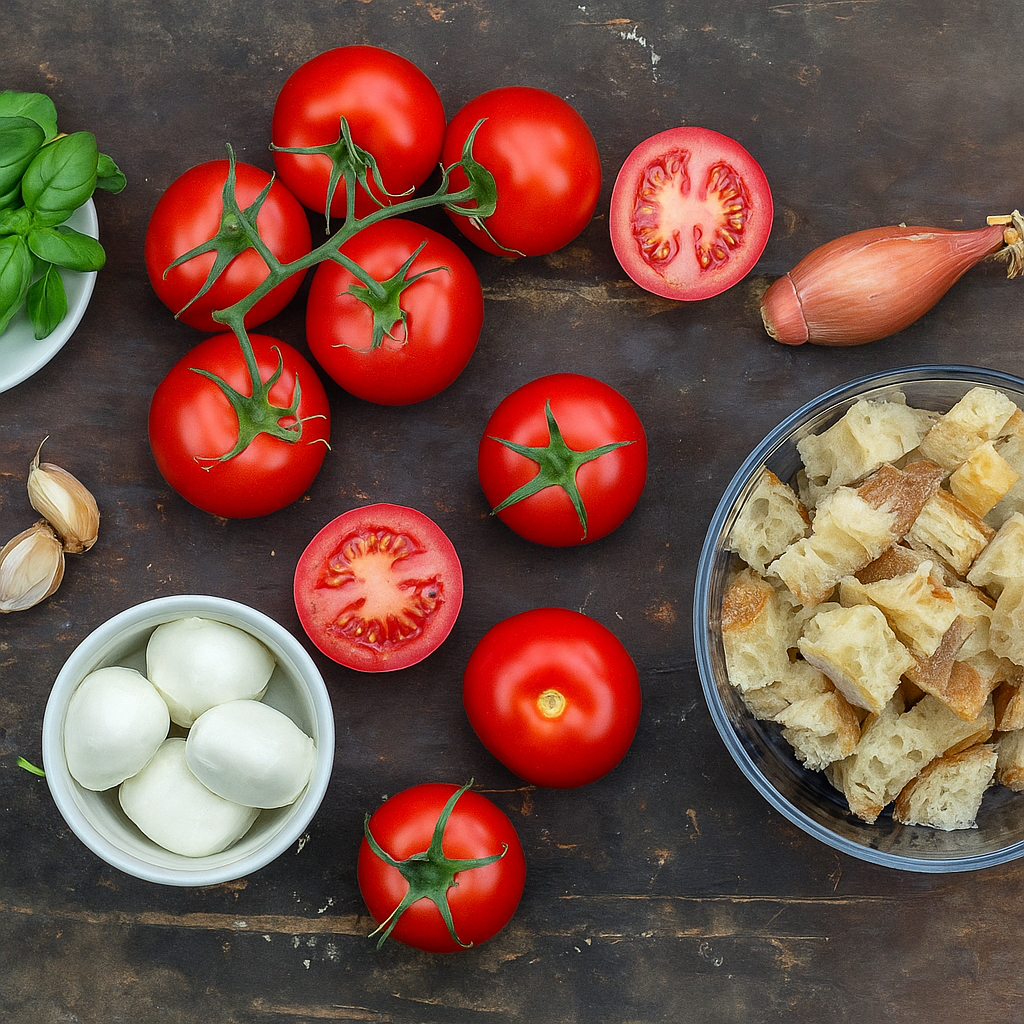
Salad panzanella includes dried rustic bread, ripe tomatoes, red onion, olive oil, vinegar, salt, and basil. Some versions include cucumbers, garlic, or even capers, but the heart of this dish is juicy tomatoes soaking into crispy bread.
Popular Add-Ins and Twists
Many people add sliced cucumbers, olives, mozzarella, or even grilled peaches. These extras can elevate the dish without straying far from the original. Just make sure the bread stays slightly crisp on the outside but soaked in flavor within.
How to Make the Perfect Salad Panzanella
Step-by-Step for Flavor That Pops
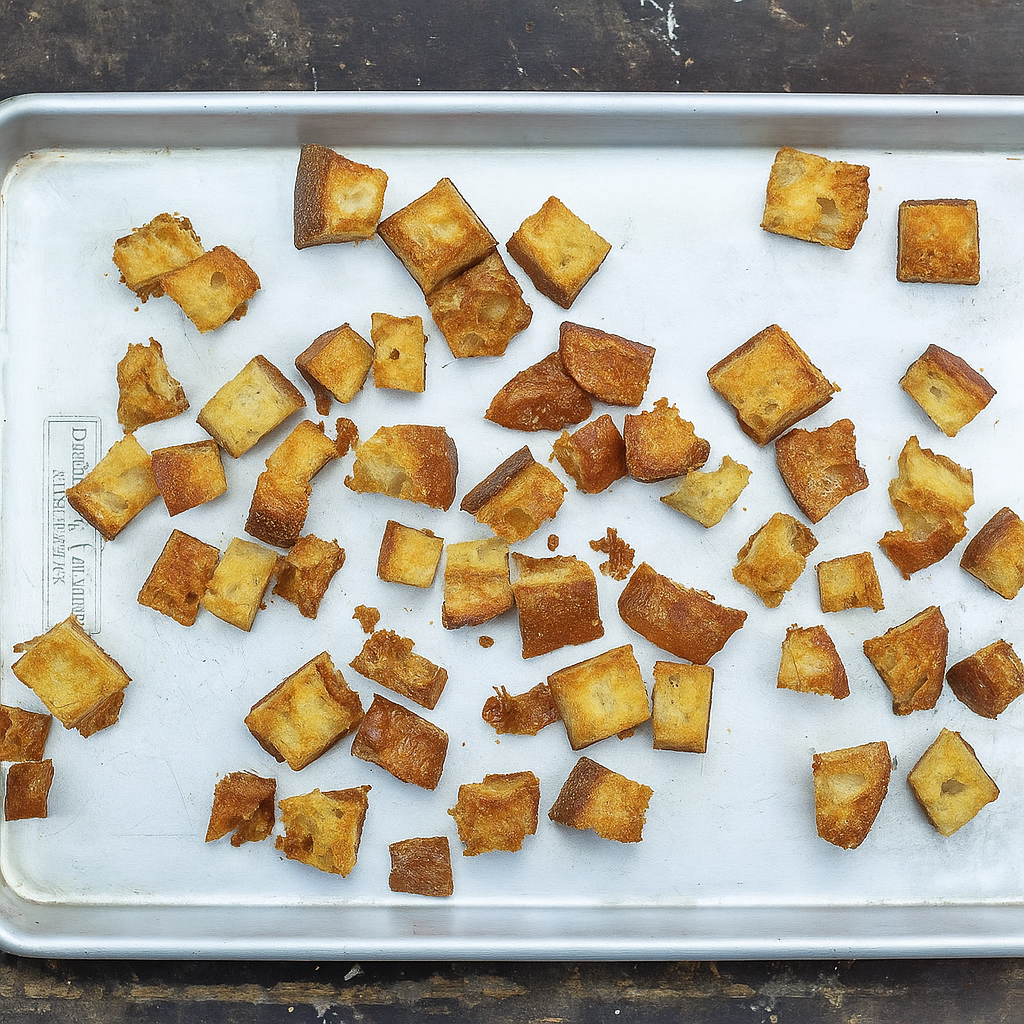
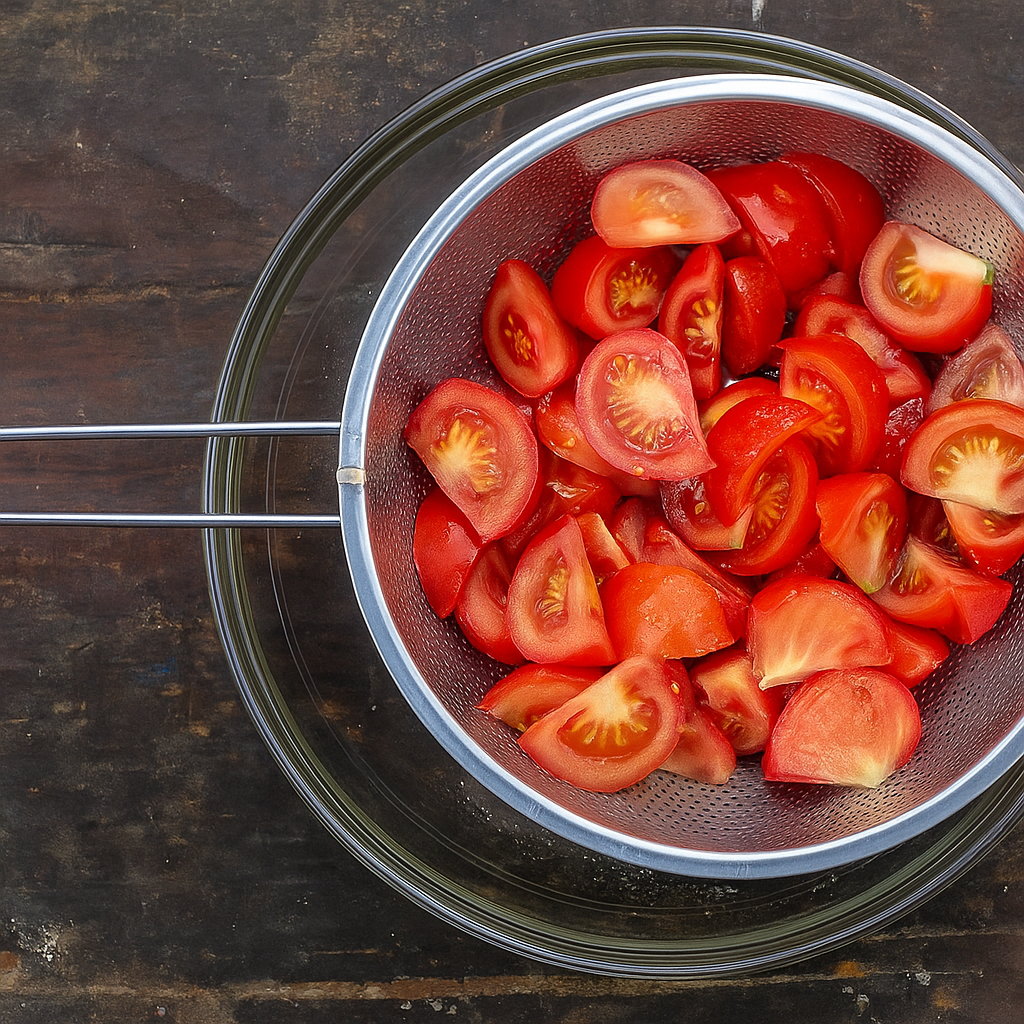
To make Salad panzanella, start with day-old bread—cut into cubes and toasted or left to dry naturally. Combine with chopped ripe tomatoes, thin-sliced red onions, cucumber, and fresh basil. In a bowl, whisk olive oil, red wine vinegar, salt, and black pepper. Toss everything gently and let it sit for 20–30 minutes so the bread absorbs the juices but doesn’t turn soggy.
Pro Tips for Best Results
Use heirloom or vine-ripened tomatoes for the most flavor. Toasting the bread helps it hold texture when it soaks up dressing. Don’t skip the rest time—it’s what transforms this from a mixed salad into a real panzanella. Want to make it shine on your table? Try serving it alongside grilled lemon chicken or a cold soup from our salad archive for a complete summer meal.
What Is the Meaning of Salad Panzanella?
The Origins Behind the Name
Salad panzanella gets its name from “pane,” meaning bread, and “zanella,” a deep plate or bowl in Italian. It originated as a clever way for Tuscan farmers to use up stale bread by mixing it with available vegetables and olive oil. Rather than waste food, they created something rustic yet satisfying—and it became a staple of cucina povera, or peasant cooking.
A Dish with Humble, Flavorful Roots
While today’s versions might include mozzarella or grilled veggies, the essence of Salad panzanella is frugality turned into freshness. It reflects a culture of simplicity, where minimal ingredients become maximum flavor. If you’re exploring other rustic Italian dishes, check out our Mediterranean pasta or bread-based recipes for more inspiration rooted in tradition.
Is Salad Panzanella Healthy?
A Naturally Nutritious Option
Salad panzanella is a wholesome choice—packed with fresh vegetables, fiber-rich bread, and heart-healthy olive oil. Tomatoes provide antioxidants like lycopene, while onions and cucumbers add hydration and crunch without extra calories. When made with whole-grain or sourdough bread, it delivers extra nutrients and helps keep you full longer.
How to Keep It Light and Balanced
To keep your Salad panzanella on the healthier side, skip heavy add-ins like processed cheese or sugary balsamic glazes. Go light on oil, load up on vegetables, and pair it with lean protein like grilled chicken or tofu. Looking for more nutrient-packed dishes? Browse our healthy salad recipes or vegetarian meals for ideas that are both simple and smart.
FAQs About Salad Panzanella
What’s in a panzanella salad?
A classic panzanella includes day-old bread, ripe tomatoes, red onion, fresh basil, olive oil, vinegar, salt, and sometimes cucumber. The bread soaks up all the juices, making every bite rich with flavor.
How to make the perfect panzanella?
Use high-quality, stale rustic bread and juicy tomatoes. Toast the bread lightly, toss it with the vegetables and dressing, then let it rest for 20–30 minutes before serving so the flavors blend beautifully.
What is the meaning of panzanella salad?
Panzanella comes from “pane” (bread) and “zanella” (a deep bowl). It started as a Tuscan dish that repurposed stale bread into a fresh, vibrant salad—a true example of resourceful cooking.
Is panzanella healthy?
Yes—when made with fresh produce and modest olive oil, panzanella is a heart-healthy, fiber-rich dish. It’s especially nutritious when paired with lean protein and whole-grain bread.
Conclusion
Salad panzanella turns humble ingredients into something truly memorable. With crispy bread, juicy tomatoes, and bold basil flavor, it celebrates everything good about summer and simplicity. Whether you’re reviving leftover bread or creating a vibrant centerpiece for your table, panzanella proves that honest food never goes out of style. Try it once, and you might just crave it all season long.
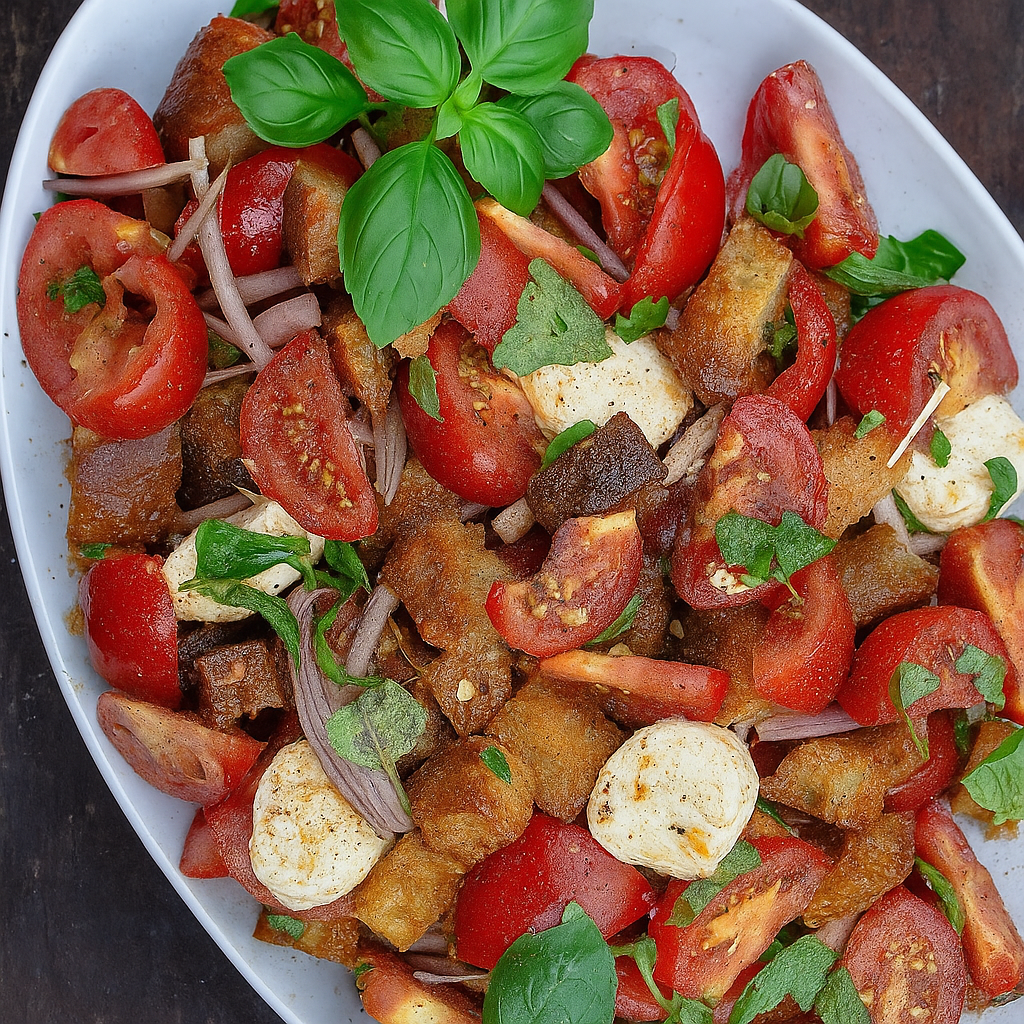
Panzanella Salad (Bread and Tomato Salad)
Ingredients
Equipment
Method
- Heat the oven to 400°F. Toss bread cubes with olive oil and kosher salt in a large bowl. Spread on a sheet pan and toast for 10 minutes until edges are crisp but centers remain chewy.
- Place sliced tomatoes in a colander over the same bowl and sprinkle with salt. Toss and let sit for 10–15 minutes to release juices.
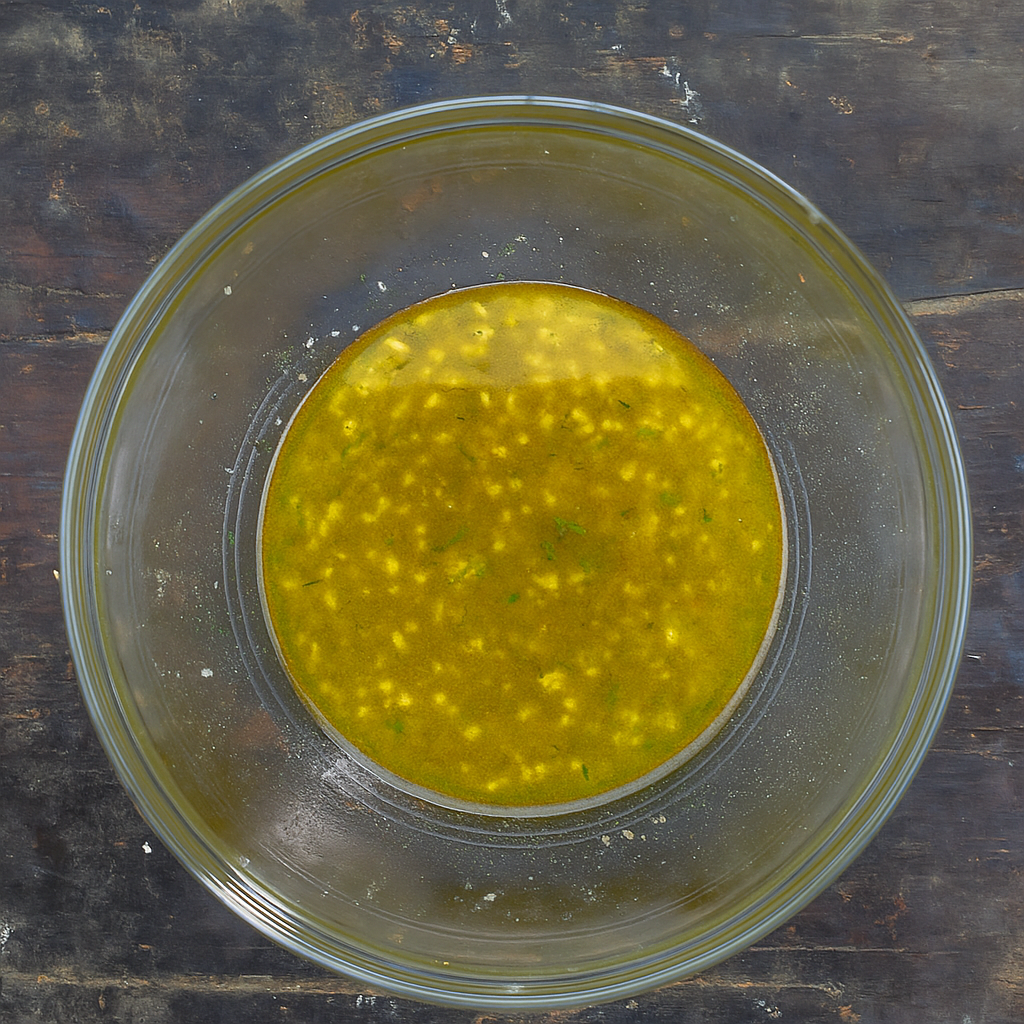
- Remove the colander. To the bowl with tomato juice, add red wine vinegar, olive oil, garlic, Dijon mustard, thyme, and black pepper. Whisk to combine into a dressing.
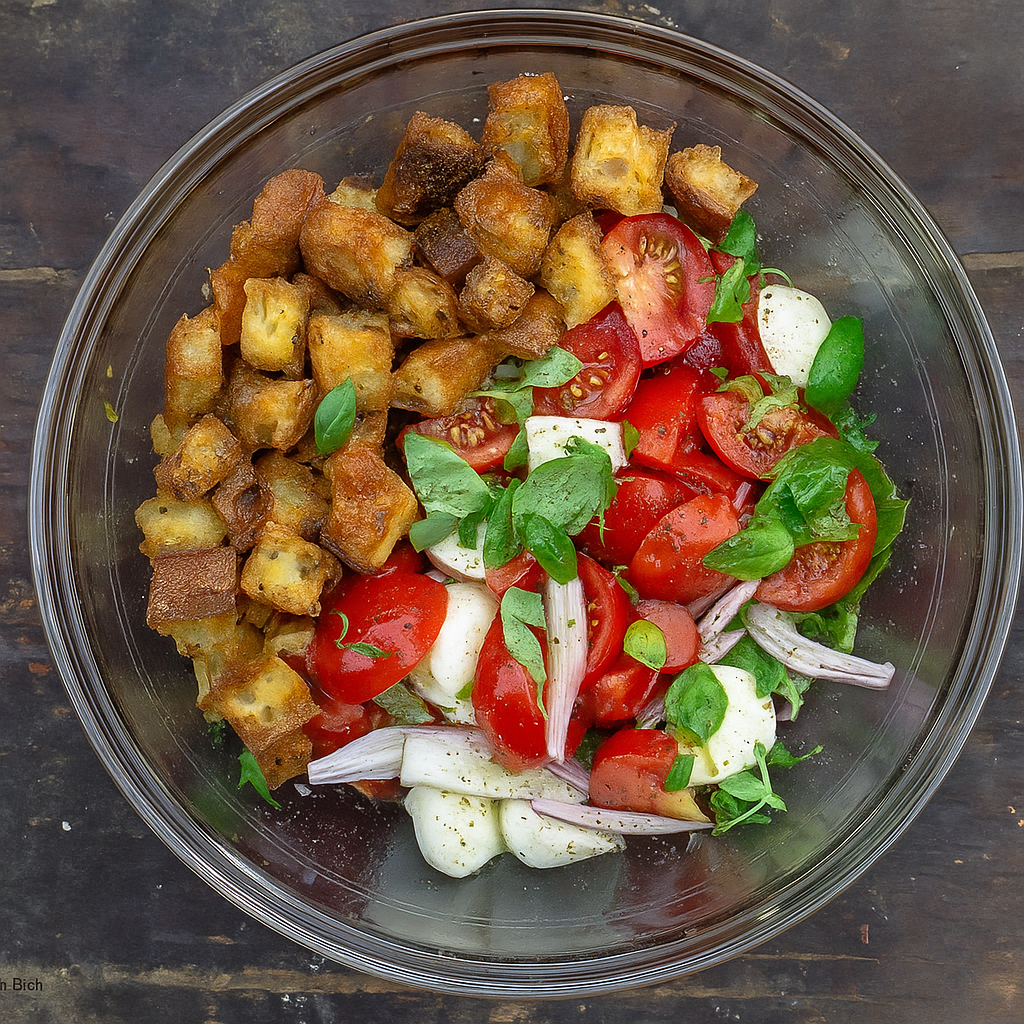
- Add tomatoes, toasted bread, shallots, basil, and mozzarella (if using) to the bowl. Toss gently to combine.
- Let the salad sit for 20–30 minutes for the flavors to meld and the bread to absorb the dressing.
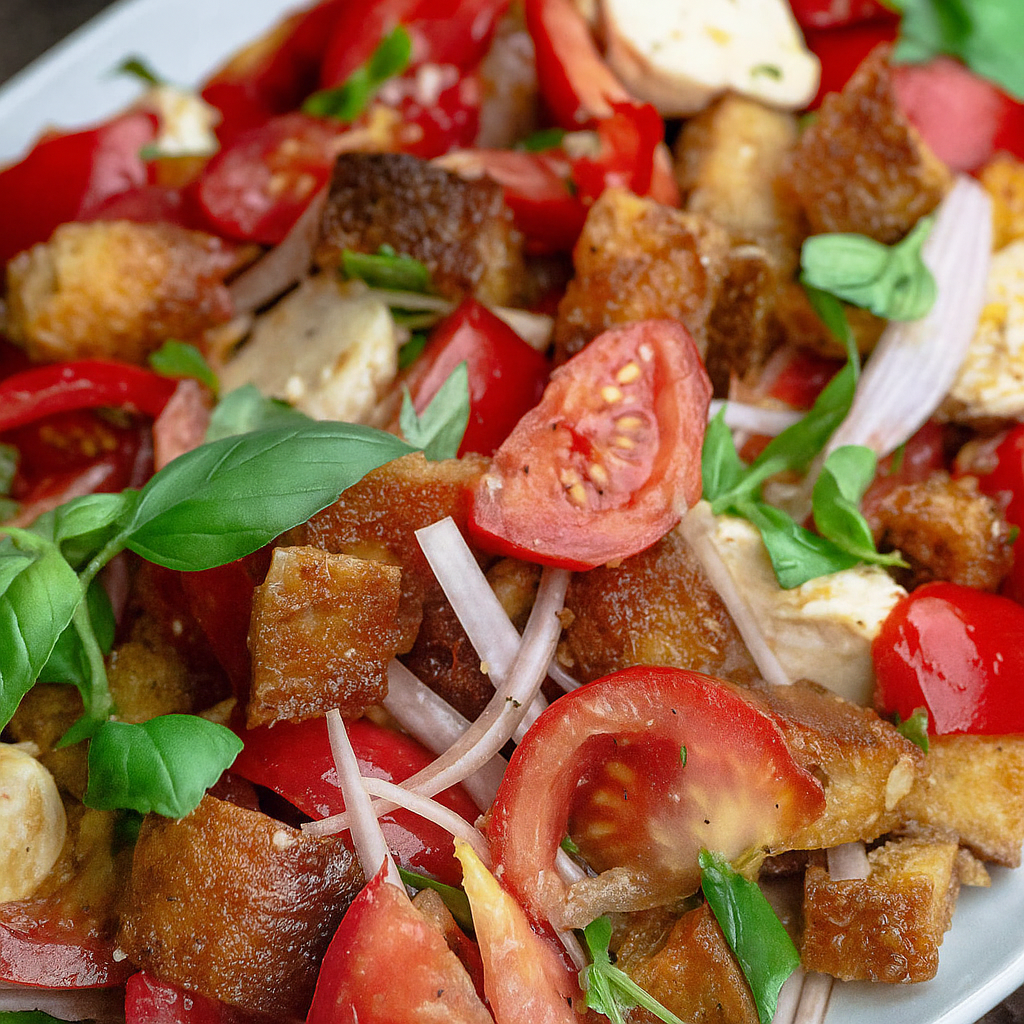
- Give the salad a gentle toss and transfer to a platter. Garnish with extra basil if desired and serve.



Leave a comment